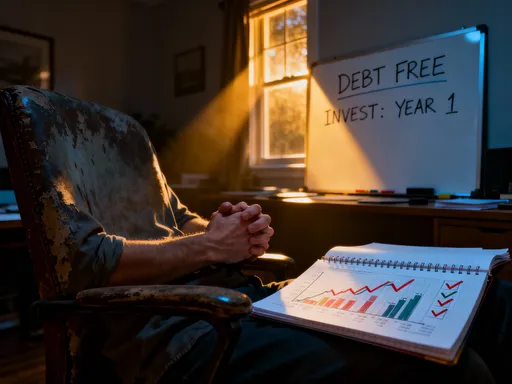
How I Cleared Debt and Found the Right Moment to Invest
What if paying off debt wasn’t the end of your financial journey—but the beginning? I once felt buried under balances, avoiding calls and dreading bills. But after testing real strategies, I broke free and discovered when to shift from repayment to investing. It’s not about waiting until you’re “rich.” It’s about timing, mindset, and smart transitions. Let me walk you through how I did it—and how you can too. This is not a story of sudden windfalls or inherited wealth. It’s about discipline, clarity, and understanding the quiet turning points that lead to lasting change. For years, I believed financial freedom was for others—people with better salaries, fewer responsibilities, or smarter instincts. But the truth is, it’s accessible to anyone willing to take consistent, informed steps. And the most powerful step isn’t the first dollar saved—it’s the decision to take control.
The Breaking Point: When Debt Felt Like a Life Sentence
There was a time when opening the mailbox filled me with dread. Not because of bills alone, but because each envelope confirmed what I already knew: I was falling behind. Credit card statements, medical balances, and an old car loan added up to more than I earned in six months. I wasn’t living extravagantly—just normally. Groceries, gas, school supplies for the kids, and the occasional repair. But every month, after bills were paid, there was nothing left. Worse, there was often a deficit. I relied on credit to cover the gap, and the cycle tightened like a noose.
Emotionally, the weight was crushing. I avoided checking my account balance. I ignored calls from unknown numbers, assuming it was another reminder. I felt ashamed, even though no one was judging me. The real judgment came from within—from the voice that whispered I should have known better, saved more, planned ahead. That voice wasn’t entirely wrong, but it wasn’t helpful either. What I needed wasn’t guilt. I needed a plan.
The turning point came on an ordinary Tuesday. My youngest needed new shoes, but my card was declined at the store. It wasn’t a large purchase—just $42—but the embarrassment was sharp. More than that, I felt powerless. That night, I sat at the kitchen table with every statement I could find. I spread them out, wrote down each balance, interest rate, and minimum payment. For the first time, I saw the full picture. The total was staggering, but something shifted in that moment. Seeing it clearly made it feel less like a life sentence and more like a problem I could solve. I realized that acknowledging the truth—no matter how uncomfortable—was the first real step toward control. And control, not perfection, was what I truly needed.
Mapping the Escape: Building a Realistic Debt Payoff Plan
Once I had all my debts listed, the next step was to create a plan that worked with my life, not against it. I knew I couldn’t cut every expense or live on rice and beans. I had a family to feed and responsibilities to meet. So instead of aiming for drastic changes, I focused on sustainable ones. The first task was to track every dollar I spent for one full month. I used a simple notebook and later switched to a free budgeting app. At the end of the month, I reviewed the data and was surprised by what I found. Small daily habits—like stopping for coffee, ordering takeout on busy nights, or impulse buys at the drugstore—added up to over $300 a month. That was more than one of my credit card payments.
I didn’t eliminate all of it, but I made choices. I started brewing coffee at home and packed lunches twice a week. I set a weekly spending limit for groceries and stuck to a list. These weren’t heroic sacrifices, but they freed up real money—around $200 a month—that I redirected toward debt. That extra amount made a difference, but I still needed a strategy for which debts to pay first. I researched two common methods: the debt snowball and the debt avalanche.
The snowball method focuses on paying off the smallest balances first, regardless of interest rate. The idea is psychological—each small win builds motivation. The avalanche method, on the other hand, targets debts with the highest interest rates first, saving more money over time. I chose a hybrid approach. I paid minimums on all debts, then applied extra funds to the smallest balance first. Once that was gone, I rolled that payment into the next smallest. But I made one exception: a credit card with a 24% interest rate. Even though the balance wasn’t the smallest, I moved it up in priority because I knew it was growing too fast. This balanced both motivation and math.
Within nine months, I paid off three accounts. Each payoff felt like a victory. I didn’t celebrate with spending—I celebrated with silence. The quiet relief of one less bill, one less reminder of stress. By the end of the second year, all high-interest debt was gone. I wasn’t earning more, but I was managing better. The plan wasn’t perfect, but it was mine. And that made it powerful.
The Hidden Cost of Waiting: Why Time Matters in Debt and Investing
For a long time, I believed I had to be completely debt-free before I could even think about investing. That seemed logical. Why grow money in a retirement account while losing money to interest? For high-interest debt, that logic holds. A credit card charging 20% interest is costing you more than almost any investment can realistically earn. In that case, every dollar you put toward debt is like earning a guaranteed 20% return—risk-free. That’s a powerful incentive to focus on repayment first.
But not all debt is the same. Some types, like federal student loans or a fixed-rate mortgage, carry low interest rates—sometimes below 5%. And here’s where timing gets tricky. While you’re paying off a low-interest loan, you might be missing out on something valuable: the power of compound growth. Compound interest means your money earns returns, and then those returns earn returns too. The longer it grows, the faster it multiplies. Starting to invest even a small amount in your 30s or 40s can lead to significantly more wealth than waiting until your 50s, even if you invest more later.
Consider this example: two people, both with $10,000 in student debt at 4% interest. One decides to wait until the debt is fully paid—five years—before investing. The other starts investing $100 a month right away, while still making regular debt payments. Assuming a 7% annual return, after ten years, the second person’s investments would be worth over $16,000. The first person, who waited, would have only five years of growth and end up with about $7,000. That’s a $9,000 difference—not because one earned more, but because one started earlier.
This doesn’t mean you should ignore debt. It means you should think strategically. High-interest debt should almost always come first. But with low-interest debt, especially when paired with opportunities like employer retirement matches, waiting can cost you more than you realize. The key is to understand the trade-offs. Every financial decision has an opportunity cost—the value of what you give up by choosing one path over another. In this case, the cost of waiting might be years of growth you can never get back.
Finding Your Financial Pivot Point: When to Shift Gears
So when is the right time to start investing while still paying off debt? There’s no universal rule, but there are clear signals that can help you decide. The first is having a basic emergency fund. You don’t need $20,000 saved, but having even $1,000 to $2,000 set aside can prevent you from going back into debt when unexpected expenses arise—like a car repair or medical bill. Without this cushion, any investment you make could be undone by a single setback.
The second signal is consistency. Can you comfortably make all your minimum debt payments each month without stress? If you’re still skipping meals or delaying bills to keep up, investing should wait. But if your budget is stable and you’re ahead of the minimums, you may be ready to do both. The third and perhaps most important factor is access to an employer-sponsored retirement plan with a match. If your job offers a 401(k) or similar plan and your employer matches your contributions—say, 50 cents for every dollar up to 6% of your salary—that’s essentially free money. Passing up a match is like turning down a guaranteed 50% return on investment. That’s hard to beat anywhere else.
When I reached this point, I hesitated. I thought, “Shouldn’t I just pay off the last $8,000 faster?” But I calculated the numbers. My remaining debt was a low-interest student loan at 3.8%. My employer offered a 100% match on the first 3% of my salary. By contributing just enough to get the full match, I was doubling my money immediately. Even after taxes, that was a better return than the interest I was paying. I decided to start small—just 3% of my paycheck—but it was a turning point. I was no longer just surviving. I was building.
This pivot isn’t about abandoning debt repayment. It’s about adding a new priority. You don’t have to choose between paying down debt and investing. You can do both, just in different proportions. The pivot point is when your financial foundation is strong enough to support two goals at once. It’s not about being perfect. It’s about being ready.
Starting Small: First Steps into Investing Without Risking Stability
When I made the decision to start investing, I was nervous. I didn’t know much about stocks or funds. I worried about losing money, especially since I had worked so hard to dig out of debt. But I reminded myself that investing doesn’t have to be risky or complicated. The key is to start with simple, low-cost options that align with long-term goals.
I began with my employer’s 401(k) plan. I chose a target-date fund based on my expected retirement year. These funds automatically adjust their mix of stocks and bonds as you get closer to retirement, becoming more conservative over time. I didn’t need to pick individual stocks or time the market. I just set up automatic contributions, and it happened in the background. That simplicity made it sustainable.
Later, I opened a Roth IRA through a reputable brokerage. I contributed $50 a month—less than my old gym membership. I invested in a broad-market index fund, which tracks the performance of hundreds of companies. Historically, the stock market has returned about 7% to 10% annually over long periods, though past performance doesn’t guarantee future results. I didn’t expect quick riches. I expected slow, steady growth. And that’s exactly what happened.
Another tool I used was a micro-investing app. It linked to my checking account and rounded up everyday purchases to the nearest dollar, investing the spare change. A $3.40 coffee became a $0.60 investment. It wasn’t much, but it added up over time and helped me get comfortable with the idea of owning investments. These small actions built confidence. I wasn’t gambling. I was planting seeds.
The most important lesson I learned was that consistency matters more than size. Investing $50 a month for 30 years at a 7% return would grow to over $60,000. That’s not magic—it’s math. And it’s accessible to almost anyone. You don’t need a six-figure salary. You need a plan, patience, and the courage to begin.
Balancing Both Worlds: Managing Debt and Investments Together
One of the biggest myths in personal finance is that you must choose between paying off debt and investing. Many believe it’s one or the other. But in reality, most people don’t have to wait until every debt is gone to start building wealth. The truth is, you can do both—if you do it wisely.
The key is balance. Instead of putting every extra dollar toward debt, you can allocate a portion to investments, especially when the numbers make sense. For example, if you have a car loan at 4% interest and access to a retirement plan with a 6% employer match, the match is likely to outpace the cost of the loan. In that case, contributing enough to get the full match while continuing regular debt payments is a smart move.
I adjusted my budget to reflect this balance. I kept making consistent debt payments—more than the minimum, but not so much that it left me vulnerable. At the same time, I maintained my 401(k) contributions and added to my Roth IRA. As my income increased through a raise and a side job, I directed 60% of the extra money to debt and 40% to investments. This ratio wasn’t fixed. As my debt shrank, I shifted more toward investing.
Real-life scenarios show how this works. Imagine someone with $15,000 in student loans at 4.5% interest and a stable job offering a 5% 401(k) match. If they earn $50,000 a year, contributing 5%—$2,500—would earn a full $1,250 match. That’s a 50% return on the first day. Meanwhile, the interest on their student loan is less than $700 a year. Even after taxes, the benefit of the match likely exceeds the cost of the debt. By doing both, they reduce debt and build retirement savings simultaneously.
This balanced approach requires discipline, but it’s sustainable. It avoids the all-or-nothing mindset that can lead to burnout. And it recognizes that financial health isn’t just about eliminating debt—it’s about creating a system that supports long-term growth.
Long-Term Mindset: From Survival Mode to Wealth Building
Looking back, the journey from debt to investing wasn’t a straight line. It had setbacks, doubts, and moments of frustration. But it also had quiet victories—the first month with no late fees, the first investment statement showing growth, the first time I felt calm about money instead of afraid. What changed wasn’t just my balance sheet. It was my mindset.
I stopped seeing money as a source of shame and started seeing it as a tool. A tool for security, for opportunity, for freedom. I learned that financial health isn’t about having a lot. It’s about making thoughtful choices, staying consistent, and adjusting as life changes. I still budget. I still track spending. But now, those habits feel empowering, not restrictive.
The shift from survival mode to wealth building didn’t happen overnight. It happened through small decisions repeated over time. Paying a little extra on a bill. Investing a small amount before spending it. Choosing long-term stability over short-term comfort. These choices compound, just like money does.
Today, I’m not rich by any public measure. But I’m free. Free from the fear of bills. Free from the weight of debt. Free to plan for the future. And that freedom didn’t come from waiting for perfect conditions. It came from starting where I was, using what I had, and making smart, timely choices.
For anyone still struggling, know this: your past doesn’t define your future. You don’t need a miracle. You need a plan, a little courage, and the willingness to begin. The right moment to invest isn’t when you have everything paid off. It’s when you’re ready to build—not just survive. And that moment may be closer than you think.